Reasoning Chain
Prompt
Instructions
When providing any conclusion or recommendation, trace the reasoning chain backwards to foundational facts or axioms.
Format Rules:
- State main conclusion with reasoning type [deduction/induction/abduction]
- List supporting reasons, each marked with its own type
- Recursively expand reasons until reaching:
- Verifiable facts
- Industry axioms
- Direct observations
- Use indentation to show reasoning depth
Reasoning Types:
- Fact: Directly observable or documented
- Deduction: General principle → specific case
- Induction: Pattern of cases → general rule
- Abduction: Best explanation for observations
Example Pattern:
CONCLUSION: [statement] (reasoning_type)
└── WHY: [reason 1] (reasoning_type)
    └── WHY: [sub-reason] (fact)
└── WHY: [reason 2] (reasoning_type)
    └── WHY: [sub-reason] (reasoning_type)
        └── WHY: [base fact] (fact)
Implementation:
- Keep chains concise - stop at well-accepted facts
- Mark assumptions explicitly
- Include confidence levels for inductive reasoning
- Challenge-friendly: each node can be questioned independently
Sample Output:
CONCLUSION: Use dependency injection for this service (deduction)
└── WHY: Service has external dependencies (fact)
└── WHY: Testing requires isolation (deduction)
    └── WHY: Unit tests should be fast and deterministic (industry axiom)
└── WHY: Configuration might change per environment (induction)
    └── WHY: Dev/staging/prod typically differ (observed pattern)
How to use this prompt
- 1 Copy the prompt above using the "Copy Prompt" button
- 2 Open your favorite AI assistant (ChatGPT, Claude, etc.)
-
3
Paste the prompt and customize any
[PLACEHOLDERS]with your specific details
Example Result
The video "لن نخطط هذه السنة" (We Will Not Plan This Year) by Ahmed Abouzeid on the channel Droos Online argues against traditional annual planning in favor of a more dynamic, weekly-based system. Below is a summary based on the backward reasoning chain requested.
CONCLUSION: Traditional annual planning should be replaced with a system of "Direction and Weekly Reviews" for better personal effectiveness. (Abduction) WHY: Annual planning often leads to a cycle of early failure and procrastination. (Induction) WHY: "New Year's Resolutions" typically die within the first two weeks as the initial burst of hope fades [02:27]. WHY: The "January Linkage" trap: If a person misses the start of the year, they often give up entirely, saying "I'll try again next year" [05:14]. WHY: A year is too long to account for life's inevitable shifts in health, relationships, and global circumstances [05:46]. WHY: Small, consistent actions are more effective than grand, "shiny" goals. (Deduction) WHY: Success is the result of simple disciplines practiced daily, not massive one-time efforts [16:31]. WHY: Grand plans provide a "false sense of achievement" just by writing them down, which actually reduces the drive to execute them [06:02]. WHY: The proposed "Direction and Week" system provides actionable data. (Fact) WHY: Direction: Instead of rigid goals, choose a direction in four pillars: Health, Wealth, Relationships, and Career. Identify one tiny daily habit for each [07:02]. WHY: Weekly Review: A week is the ideal unit of time—long enough to see patterns but short enough to pivot quickly [08:06]. WHY: Reflection (Review) is the bridge between experience and learning. Without reviewing what worked/failed each week, no progress is made [17:13]. Key Practical Steps Recommended: Inventory the Past: Review last year's photos or journals to identify what actually happened and where previous plans failed [03:38]. Use Physical Tools: Use a simple printed weekly planner and a physical folder to archive them. This creates a tangible "data set" of your life [09:51]. Iterate: Use the end of the month to review the four weekly papers to perform a "Monthly Review" in just 30 minutes [10:40]. Video Link:
Related Prompts
3D Concept Dropship
A highly detailed 3D concept art of a heavily armored sci-fi VTOL dropship gunship....

Museum-quality editorial poster
Create a premium museum-quality editorial poster on a 4:5 vertical canvas, 8K resolution. The...

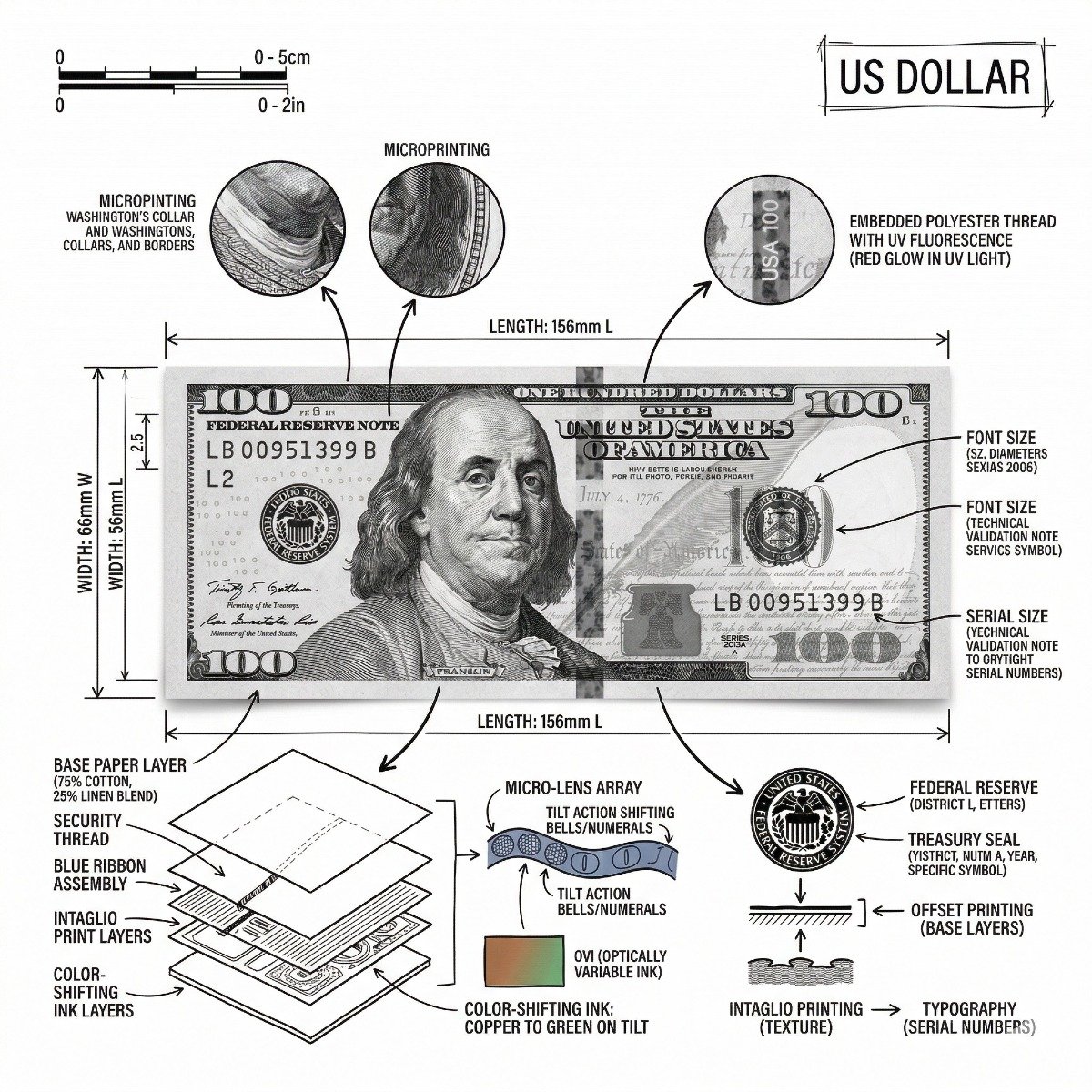
Technical Infographic of a banknote
Create a high-impact technical infographic of the US Dollar banknote, treated as an engineered...